
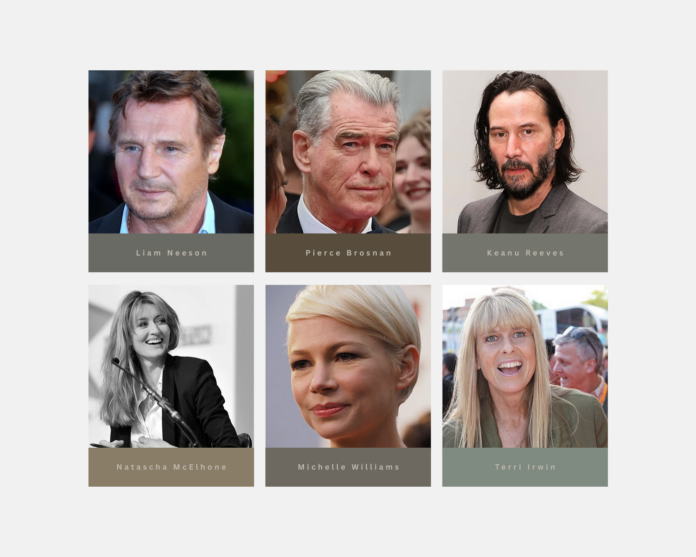
Behind some of the world’s most recognisable faces, grief is no stranger.
When a partner dies, life can feel as though it has simply stopped. The ordinary routine, the sounds, the habits, the small anchors of daily life, suddenly mean nothing. And it is hard, in those early weeks and months, to imagine how things could ever feel manageable again.
One of the quiet things that can help, in time, is realising that this experience is not yours alone. Widowhood touches every kind of life. It reaches people regardless of circumstance, profession, or public profile. The grief felt in a small house in rural Ireland is the same grief felt in a hillside mansion in Los Angeles or a farmhouse in Queensland.
The actor Keanu Reeves was once asked on The Late Show with Stephen Colbert what he believes happens to us after we die. It is the kind of question that could invite a long philosophical answer. Instead, he said simply:
“I know that the ones who love us will miss us.”
There is nothing complicated in that sentence. And perhaps that is the point. Grief, at its core, is straightforward, even if living through it is not.
The following people have all walked this path. Their lives are very different from most of ours. But their experience of losing a partner is not.
Liam Neeson
Irish actor Liam Neeson lost his wife, actress Natasha Richardson, in March 2009, after a skiing accident in Canada. She was 45. Their two sons, Micheál and Daniel, were teenagers at the time.
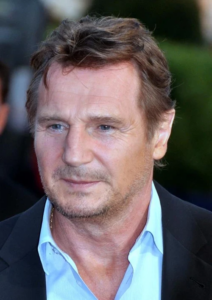
For years after Natasha’s death, Neeson said very little publicly about his loss. When he did speak, it was on his own terms and with great honesty. Speaking to Esquire in 2011, he said: “That’s the weird thing about grief. You can’t prepare for it. You think you’re gonna cry and get it over with. You make those plans, but they never work.”
More than a decade later, he told CNN that grief comes in waves. “You just get this profound feeling of instability. The earth isn’t stable anymore. And then it passes, and it becomes more infrequent, but I still get it sometimes.”
Neeson described the way it arrives unexpectedly, not in the moments you steel yourself for, but in ordinary ones. “It hits you in the middle of the night,” he said. “I’m out walking. I’m feeling quite content. And it’s like suddenly, boom.”
He raised his sons and continued working, moving forward not because the loss had faded, but because life kept asking things of him and he answered. In interviews over the years, he has spoken of visiting Natasha’s grave regularly, of talking to her still, as though the conversation between them simply continues in a different form. It is a small detail, but it says something important about how people carry those they have lost. Not by letting go, but by finding quiet ways to hold on.
Pierce Brosnan
The Irish actor Pierce Brosnan watched his first wife, Australian actress Cassandra Harris, live with ovarian cancer for four years before she died in December 1991. She was 43. Their son Sean was eight years old.
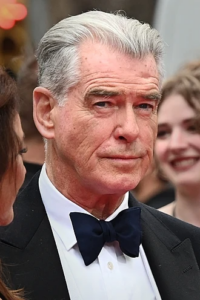
Brosnan described the experience of supporting a partner through serious illness plainly. “When your partner gets cancer, your life changes,” he said. “Your timetable and reference for your normal routines and the way you view life, all this changes. Because you’re dealing with death.”
After Cassandra died, he said: “There is an incredible cruelty in it all, losing a person you shared everything with. This is the first time in my life I’ve ever experienced bereavement. And it’s overwhelming.”
He raised Sean, eventually found love again with journalist Keely Shaye Smith, and later reflected on what he had learned. “I know what it’s like to be a widower and what it’s like to find love again. So I know there’s hope and that you have to learn to get on with it. But the memory of Cassie and her fight against cancer is never forgotten.”
His story carries a quiet acknowledgement for those whose grief is complicated by a long illness. The loss can begin long before the death itself. The exhaustion and love that come with caring for a partner are part of the grief too, and they deserve to be recognised.
Keanu Reeves
Keanu Reeves carries his grief quietly. In 1999, the couple’s daughter was stillborn. Less than two years later, in 2001, his partner Jennifer Syme died in a road accident. He has never made his grief a public story, and he has never been pressed to.
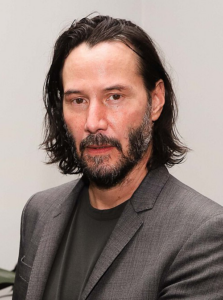
What he has offered, occasionally, is a kind of stillness on the subject. When asked on The Late Show what he believes waits for us after death, he set aside the philosophical question entirely and answered from somewhere more personal. “I know that the ones who love us will miss us.” It is the answer of someone who has thought about this not as an abstract idea, but as something he has lived through. There is no reach for comfort in it, no promise of reunion or peace. Just the simple truth that love and loss are inseparable, and that missing someone is itself a form of love continuing.
Visible today is a man who has come through profound loss and continued to build a life. In recent years he has spoken about finding happiness again, about gratitude, and about not taking the present moment for granted. None of that came from publicly talking about his grief. It came from living, quietly and steadily, through it.
Natascha McElhone
Actress Natascha McElhone will be familiar to many Irish readers as the woman Jim Carrey was desperately trying to reach in The Truman Show. Born in London to an Irish mother with Donegal roots, she took her mother’s maiden name, McElhone, as her stage name.
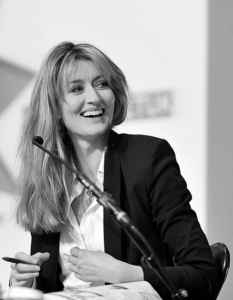
In May 2008, she was filming in Los Angeles when she received the call that her husband, surgeon Martin Kelly, had been found collapsed in the doorway of their London home. He died of an undiagnosed heart condition. He was 43. Natascha was pregnant with their third child, and their sons Theo and Otis were eight and four.
She has described the loss as sudden and total. “My husband was there, then he wasn’t.”
When the time came to give birth to their son Rex, she made the decision to go through it without a support person beside her. She was attended by medical staff, but otherwise on her own. She later explained: “I wanted to be on my own because that was the way it was going to be. I was going to be my baby’s only parent, so I may as well get used to it.”
In the months that followed, she began writing letters to Martin. Not for publication at first, but to help herself keep hold of him. “Writing to my husband has enabled me to keep him here long enough to ‘come to terms’ with losing him,” she later reflected. Those letters became her memoir, After You: Letters of Love, and Loss, to a Husband and Father, published in 2010.
Her experience is a reminder that grief and new life can arrive at the same time, and that surviving both, in whatever way you can, is all that is asked of you.
Michelle Williams
Actress Michelle Williams is perhaps best known for her role in Brokeback Mountain, the 2005 film in which she played the wife of a man secretly in love with another. The role brought her an Oscar nomination and introduced her to a wide audience. It also marked the beginning of her relationship with her co-star, Heath Ledger. They were not married, but they built a life together and in 2005 their daughter Matilda was born.
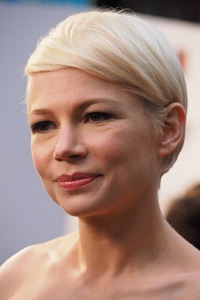
In January 2008, Heath Ledger died suddenly from an accidental overdose of prescription medication. He was 28. Matilda was two years old. Williams was 27 and suddenly faced with raising their daughter alone.
She has spoken over the years about what that experience is like, the particular tenderness and difficulty of raising a child who carries the face and nature of someone you have lost. A child who is at once a daily reminder of absence and a living connection to the person who died. She has described how Matilda keeps Heath’s memory present in her life, not as something she has to manage or work around, but simply as part of how life is now.
For anyone raising children alone after bereavement, that sense of a person continuing to exist through a child they left behind may feel very familiar. It is one of grief’s quieter and more complicated gifts. Michelle Williams has gone on to build a full life, working, remarrying, and raising her family. She has never hidden the fact that Heath Ledger remains part of that life through Matilda.
Terri Irwin
In September 2006, conservationist Steve Irwin, known and loved worldwide as the Crocodile Hunter, died suddenly after a stingray injury while filming a documentary off the coast of Queensland. He was 44 years old, full of energy and plans, and then he was gone. Terri was left with their daughter Bindi, then eight, and son Robert, then two years old and too young to fully understand what had happened to his father.
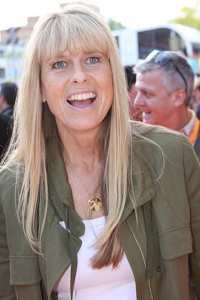
There was no time to fall apart. The children needed her, the zoo needed her, and the conservation work that she and Steve had built together needed someone to keep it alive. Terri stepped into all of it, not because she was extraordinary, but because there was no one else. She has said herself: “I couldn’t fall to pieces because the children were there.” That is not the statement of a fearless woman. It is the statement of a mother who simply had no other option.
Nearly twenty years on, she has become one of the most honest public voices on what grief actually does to a person over time. She has pushed back gently but firmly on the idea that time heals everything. “When they say time heals all wounds, it doesn’t,” she has said. “But eventually it changes, and it walks next to you. It’s always there, and you have to acknowledge your grief, but it’s a companion rather than an all-consuming feeling.”
On the fourteenth anniversary of Steve’s death, she wrote simply: “I feel that I have a choice: celebrate love or struggle with grief. I choose love.” That is a beautiful sentiment, and it is hard won. Behind those words are nearly two decades of early mornings, of parenting alone, of keeping the work she and Steve built together alive long after he was gone. The grief has not disappeared. It has simply become part of who she is, carried quietly, day after day, alongside everything else.
A final thought
None of the people in this article would have chosen what happened to them. Fame, success, and a public profile offered no shelter from loss and no preparation for the particular silence that follows when a partner dies. They sat with the same shock, the same disbelief, the same impossible task of getting through the next hour that anyone who has lost a partner knows so well.
But they did get through it. Not in a straight line, not without pain, and not by forgetting the person they lost. They got through it by doing what you are doing, by finding a way to keep going even on the days when keeping going felt like the hardest thing in the world.
What their stories offer is not a roadmap, because there is no such thing. Every loss is its own, and every person finds their own way through. What these stories offer instead is something quieter and perhaps more valuable than advice. They offer company. The simple knowledge that you are not alone in this, that the road you are on has been walked by many people before you, and that most of them, in time, found reasons to keep going.
Grief does change life forever. That is simply true and there is no point in pretending otherwise. But within that changed life, most people find, slowly and often unexpectedly, that there is still warmth to be had. Still connection, still moments of lightness, still reasons to get up in the morning. Not the same life as before. A different one, shaped by loss, but a life nonetheless.
You deserve that life. And you will find your way to it.
You Don’t Have to Walk This Road Alone
If you are finding the road difficult, you are welcome to join our peer support community at Widow.ie. It is free to join, and you will find people there who understand, because they are walking the same road too.