

Last Updated on January 10, 2026
Deaths in Ireland are rising faster than supports
A new report on death and bereavement warns that the number of deaths in Ireland will rise sharply over the coming decades, while bereavement and end-of-life supports are not keeping pace. Unless services expand, more families will face loss with limited practical and emotional support.
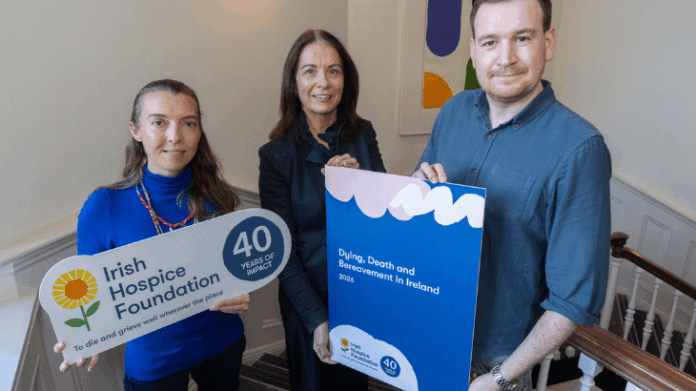
The findings come from a national report published by the Irish Hospice Foundation, which examined how Ireland supports people at the end of life and in the months and years after a death. Many widowed and bereaved people already live with these gaps, particularly once the immediate period after a death has passed and formal support begins to fall away.
Community and palliative care are under strain
The report highlights ongoing pressure on community-based and palliative care services. In many areas, out-of-hours supports remain limited, leaving families to manage complex situations at home with little guidance.
For partners, support can be limited during the final stages of illness and often falls away quickly once a death occurs. Grief, however, does not fade at the same pace.
Families are often not told when death is close
One of the most difficult findings in the report concerns communication. In many cases, families are not clearly told when death is approaching, even when clinicians understand that a person is dying.
This lack of clarity can leave partners and families unprepared. For widowed people, it can deepen the shock of loss and create lasting distress about whether there was time to understand what was happening or to prepare emotionally.
Bereavement is treated as short-term, but grief is not
The report acknowledges that services often treat bereavement as a short-term event, despite clear evidence that grief unfolds over months and years. Some supports exist, but access varies widely depending on location, referral pathways, and waiting lists.
Ireland does not yet have a universal bereavement care pathway. There is also no statutory entitlement to bereavement support, which means many families receive little structured help beyond the early weeks after a death.
Work and bereavement remain poorly aligned
The report again raises concerns about bereavement leave. Ireland continues to offer limited statutory provisions, which means many widowed people return to work far sooner than they feel ready.
Some employers show compassion, but others do not. As a result, people often rely on sick leave to grieve or feel pressure to function normally when their lives have fundamentally changed.
Who produced the report and why it matters
The report, Dying, Death and Bereavement in Ireland 2026, brings together national data, research, and long-term trends to assess how Ireland supports people at the end of life and after death.
Although the report is written for policymakers, its findings closely reflect the lived experiences shared by many widowed people. It confirms that communication failures, service gaps, and short-term approaches to grief remain widespread.
What this report confirms for widowed people
For many readers, the value of this report lies in recognition. It confirms that difficulties after a death do not stem from personal weakness or a lack of resilience.
By placing these experiences on the public record, the report creates a reference point for future change. Whether its recommendations lead to meaningful improvement remains uncertain, but the issues it raises already shape daily life for many families in Ireland.
Bereavement support
If you are grieving, or are concerned about someone else who is, support is available. The Irish Hospice Foundation provides a Bereavement Support Line for people who need to talk or who are unsure where to turn.
The Bereavement Support Line is available on Freefone 1800 80 70 77, Monday to Friday from 10am to 1pm. No one has to grieve alone.